Mama Mommy Mom Mother's Day: An Embroidery Review
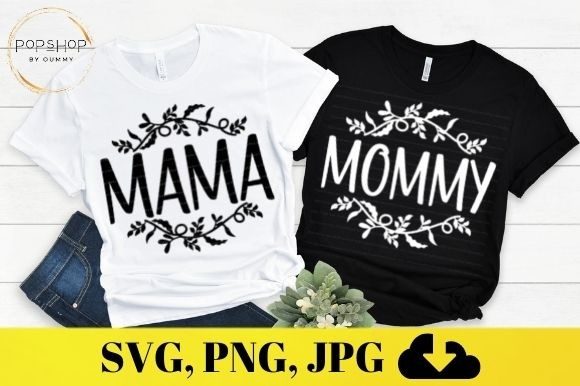
As a designer who has spent years digitizing and reviewing graphics for textile applications, I approach every new asset with a specific question: will this actually stitch out cleanly on fabric? When evaluating the Mama Mommy Mom Mother s Day design package, my perspective shifts from pure graphic appreciation to practical manufacturing reality. This collection is marketed as a matching family design containing high-resolution SVG, PNG, and JPG files. While these vector and raster formats are excellent for print-on-demand or vinyl cutting, translating them into a successful machine embroidery design requires a critical eye for line weight, negative space, and overall composition.
The visual personality of this artwork leans heavily into sentimental typography and familial connection. It carries a warm, nostalgic mood that immediately suggests soft textiles rather than rigid industrial materials. As an illustration intended for digital use, it is versatile. However, for those of us in the craft business or running an Etsy shop, the true test is how these graphics perform when converted into stitches. The layout appears balanced for center-chest placement on custom apparel or as a focal point on a tote bag design, but success depends entirely on how you interpret the original graphic lines during the digitization process.
Real-World Application: The Custom Sweatshirt Test
To truly judge the viability of Mama Mommy Mom Mother s Day for commercial embroidery projects, I mentally placed this design onto a heavyweight cotton fleece sweatshirt. This is currently one of the most popular canvases for personalized gifts and small shop products. In this scenario, the design needs to hold its own against the fabric texture without becoming a bulletproof patch of thread.
If you are creating a matching set for a mother and child, consistency is key. For the adult sweatshirt embroidery, the larger scale allows for more intricate satin stitch borders or decorative fill stitch patterns within the lettering. You have room to let the design breathe. However, when scaling down for baby embroidery on a onesie or bib, the complexity must be reduced. The original high-resolution PNG is useful here as a tracing template, but you cannot simply shrink a complex adult design. Tiny serifs or thin connecting lines that look elegant on screen will disappear or cause thread breaks on a 4x4 hoop size. In my experience testing similar family-themed graphics, simplifying the internal details for the infant version ensures the finished product remains soft and safe against sensitive skin.
Fabric Considerations and Stabilizer Strategy
The versatility of this graphic means it will likely be applied to various substrates, each presenting unique challenges. When planning your embroidery project, consider the following fabric interactions:
- Stretchy Knits and Fleece: Essential for mom life apparel. Use a cut-away stabilizer to prevent distortion. The design’s organic shapes can warp if the fabric shifts during stitching.
- Woven Cottons (Tote Bags/Aprons): These provide a stable base ideal for crisp running stitch outlines. A tear-away stabilizer usually suffices, allowing for a cleaner backside on unlined bags.
- Terry Cloth (Kitchen Towels): If using this for holiday embroidery on tea towels, you must use a water-soluble topping. Without it, the stitches from Mama Mommy Mom Mother s Day will sink into the pile, ruining the legibility and visual appeal.
- Dark Fabrics: Since the provided files are digital graphics, check your contrast. White or cream thread on navy fleece creates a classic boutique look, whereas dark thread on dark fabric requires higher stitch density to show up effectively.
Translating Digital Graphics to Stitch Files
It is vital to remember that the product description lists SVG, PNG, and JPG files. These are design assets, not native embroidery files like DST or PES. For creative entrepreneurs and apparel decorators, this distinction matters immensely. You are purchasing the art, not the stitch path. This gives you total control over the digitizing, which is a benefit for professionals but a warning for beginners.
When converting Mama Mommy Mom Mother s Day into a digital embroidery file, pay close attention to the stroke width. Illustrations often feature variable line weights that look beautiful in print but are problematic in thread. A tapered line might require switching from a satin stitch to a fill stitch mid-letter, which can create visible texture changes. I recommend maintaining a consistent column width throughout the text elements to ensure professional results. If the original graphic has distressed or grunge textures, smooth them out before digitizing. Attempting to replicate pixelated distress with thread usually results in excessive jump stitches and a messy final appearance.
Commercial Viability and Customer Perception
For Etsy sellers and handmade shop owners, the perceived value of a finished product relies on execution. Customers trust brands that deliver clean, durable goods. Using Mama Mommy Mom Mother s Day effectively means understanding where it adds value and where it might detract.
This design excels in creating emotional connections. It is inherently gift-ready for Mother’s Day, baby showers, and family reunions. When used on a printable mockup for your online listing, the high-resolution PNG allows you to showcase the design clearly before you even stitch a sample. However, do not rely solely on digital previews. Buyers want to see real stitch-outs to gauge quality. Photographing the actual embroidered patch or garment builds confidence and demonstrates that you understand fabric behavior.
Be cautious with licensing. Always verify the specific terms included in your ZIP file regarding commercial use of finished items versus selling the digital file itself. Protecting your business means respecting intellectual property while leveraging these graphics to build your unique brand identity.
Practical Designer Notes for Success
Before launching a new collection featuring Mama Mommy Mom Mother s Day, run through this practical checklist to avoid costly mistakes:
- Test on Scrap Fabric First: Never stitch directly onto a sellable garment without a test run. Check for registration issues between the outline and fill areas.
- Evaluate Thread Color Contrast: View your chosen thread colors in natural light. What looks good on a monitor may lack definition on physical fabric.
- Review Stitch Density: Ensure the design isn't too dense for lightweight fabrics or too sparse for heavy canvas. Adjust underlay settings accordingly.
- Confirm Hoop Size Compatibility: Measure the actual dimensions of the digitized design. Ensure it fits comfortably within your machine’s maximum sewing field with adequate margin for hooping.
- Inspect Small Details: Zoom in on your digitizing software. Remove any nodes or anchor points smaller than 1mm to prevent needle breaks.
- Mockup Testing: Create both black and white versions of your mockups to see how the design reads in different lighting conditions for social media marketing.
- Stabilizer Audit: Match your stabilizer weight to the fabric and design density. Over-stabilizing makes the item stiff; under-stabilizing causes puckering.
Final Thoughts on Versatility
Mama Mommy Mom Mother s Day offers a strong foundation for a wide range of handmade products, from nursery decor to custom apparel. Its strength lies in its emotional resonance and adaptable layout. By treating the provided SVG and PNG files as high-quality source material rather than final outputs, you unlock the potential to create truly bespoke embroidered goods. Whether you are making a personalized gift for a client or stocking your shop for the holiday season, success comes from respecting the relationship between the digital art and the physical thread. Take the time to digitize with intention, test thoroughly, and your finished products will reflect the care and professionalism that customers seek in the handmade marketplace.