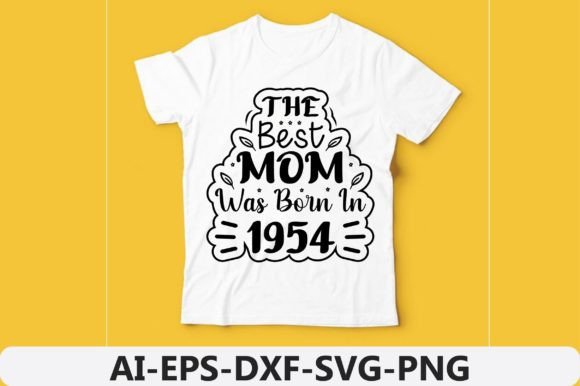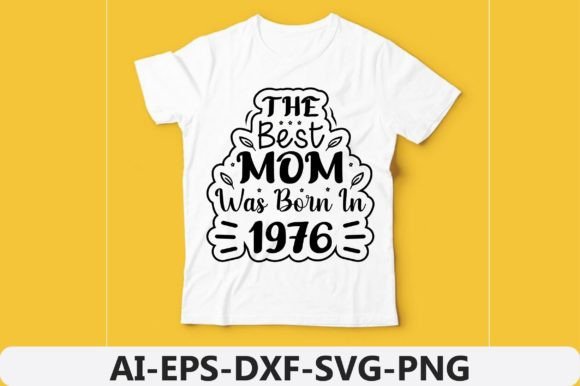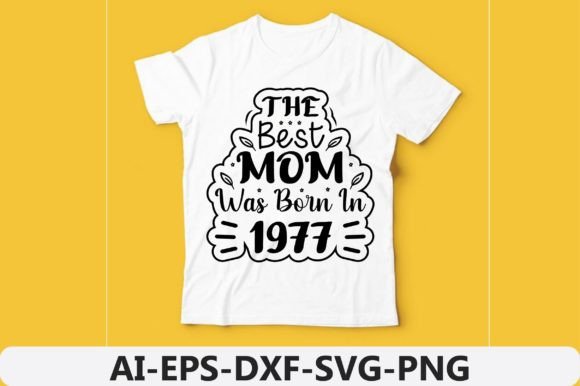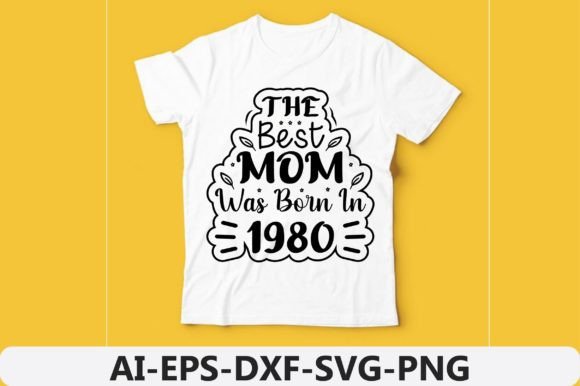
Reviewing The Best Mom Was Born in Year 1933
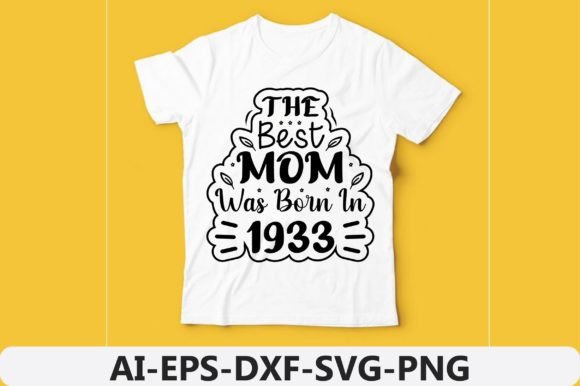
As a designer who has spent years digitizing and reviewing graphics for production, I approach every new asset with a critical eye. When evaluating The Best Mom Was Born in Year 1933, my first thought isn't just about the sentiment; it is about how this graphic translates from a screen to a tangible, stitched reality. This design falls under the category of T-Shirt Designs and Graphics, but for those of us in the embroidery industry, its true value lies in its adaptability as a machine embroidery design. The layout suggests a classic, commemorative aesthetic that resonates deeply with families celebrating milestones, yet it requires specific technical considerations to ensure the final embroidered patch or garment looks professional rather than amateur.
First Impressions and Visual Hierarchy
Upon opening the digital files, the visual personality of The Best Mom Was Born in Year 1933 feels nostalgic and celebratory without being overly cluttered. For an Etsy seller or small shop product creator, this balance is vital. A design that is too dense can pucker lightweight fabrics, while one that is too sparse may lack perceived value on heavier items like sweatshirts or tote bags. The typography appears structured to accommodate various stitch types. If the numbers "1933" are rendered in a bold serif or script, they naturally lend themselves to satin stitch columns, which provide that high-sheen, premium finish customers expect in custom apparel. Conversely, if the text "The Best Mom" utilizes a thinner font weight, it may require conversion to running stitch or fill stitch depending on the desired texture and fabric stability.
For craft business owners, the versatility of receiving SVG, EPS, DXF, AI, and Transparent PNG formats is a significant advantage. While these are vector and raster graphics rather than pre-digitized embroidery files, they serve as pristine source material. As a reviewer, I appreciate having the AI or EPS file because it allows me to manipulate nodes before digitizing. I can thicken thin lines to prevent needle breaks or adjust spacing to account for thread pull compensation, ensuring the design remains legible after stitching.
Real-World Application: The Commemorative Sweatshirt Project
To truly judge this asset, I mentally placed it into a recent client scenario: creating a custom embroidered sweatshirt for a family reunion honoring a matriarch born in 1933. In this real-life application, the design serves as the centerpiece of a personalized gift. Sweatshirt embroidery presents unique challenges due to the fleece backing and stretchy knit face. When applying The Best Mom Was Born in Year 1933 to this medium, the design’s density becomes the primary concern.
If I were digitizing this for a crewneck sweatshirt, I would likely utilize a cutaway stabilizer to support the stretch fabric. The design elements would need adequate underlay—perhaps a center walk or edge run—to anchor the stitches into the fleece pile before the top stitching lays down. Without this preparation, even the most beautiful graphics can sink into the fabric texture, resulting in a muddy appearance. For this specific project, the vintage year theme pairs beautifully with muted, retro thread colors. However, as a designer, I must verify that the contrast between the thread and the dark navy or charcoal sweatshirt is sufficient. Testing the design in black and white mockups beforehand helps predict whether the details will pop or disappear once stitched.
Navigating Fabric Limitations and Hoop Constraints
While The Best Mom Was Born in Year 1933 is versatile, there are environments where caution is necessary. Small hoop sizes, such as 4x4 inches, often force designers to shrink text to fit. With a date-specific design like this, reducing the size too much can make the "1933" illegible. If your machine only supports smaller hoops, consider splitting the design into two parts (e.g., "Best Mom" on the chest, "Est. 1933" on the sleeve) or opting for a simpler monogram version for small areas.
Textured fabrics like terry cloth tea towels or waffle-weave kitchen linens also demand attention. These materials have high loft, meaning fine details in the graphics can get lost. When using this design for holiday embroidery on tea towels, I recommend adding a water-soluble topping to flatten the fabric pile during stitching. This ensures the satin stitches remain smooth and the lettering stays crisp. Similarly, curved surfaces like caps require specialized digitizing. A flat graphic does not automatically wrap around a hat crown correctly. If you plan to use this for cap embroidery, ensure you distort the design vertically in your software to compensate for the curve, otherwise, the top of the letters may appear pinched in the finished product.
Critical Considerations for Delicate Materials
- Stretchy Fabrics: Always use appropriate stabilizer and avoid excessive stitch density to prevent tunneling or distortion on jersey knits.
- Sheer or Thin Fabrics: Check if the design includes heavy fill areas that might weigh down delicate material; consider a lighter stitch type or applique design variation.
- Dark Fabrics: Verify thread color contrast; metallic or light-colored threads often work best for vintage dates on dark backgrounds.
- Frequent Washing: Ensure all elements are securely anchored with proper underlay so the design withstands laundering on baby clothes or aprons.
Commercial Viability and Professional Presentation
For digital product sellers and handmade shop owners, the presentation of The Best Mom Was Born in Year 1933 directly influences buyer engagement and customer trust. A generic mockup rarely sells the dream. Instead, create printable mockups that show the design on realistic textures. Show it stitched on a canvas tote bag design to demonstrate durability, or on a soft blanket to evoke comfort. Buyers need to visualize the finished product in their hands.
From a commercial embroidery perspective, consistency is key. If you offer this as part of a "Born In" series, ensure the stitch density and style match across different years. Customers collecting items for multiple generations will notice if the 1933 version uses a dense fill stitch while the 1950 version uses a running stitch. Maintaining brand consistency across your design assets builds recognition and professionalism. Furthermore, always confirm licensing terms before selling finished items or digital embroidery files derived from these graphics. Understanding whether you have commercial rights protects your business and ensures ethical practices within the maker community.
Essential Pre-Production Checklist
Before listing this as a new product or starting a client commission, run through these practical designer notes to avoid costly mistakes:
- Test Stitch First: Never assume a digital file is stitch-ready. Run a test on scrap fabric similar to your final project to check registration and tension.
- Verify File Compatibility: Since this product provides vector and image formats (SVG, PNG, EPS, DXF, AI), confirm you have the software or service required to convert them into machine-readable embroidery formats like DST or PES.
- Assess Stitch Density: Review the design for areas that might be too dense for your target fabric. Adjust pull compensation to account for fabric shrinkage during stitching.
- Check Thread Colors: Plan your palette ahead of time. Vintage themes often benefit from variegated or matte threads rather than standard high-sheen rayon.
- Inspect Small Details: Zoom in to identify any tiny elements that may not stitch out clearly. Simplify or remove details smaller than 1mm to prevent thread nests.
- Evaluate Washability: If making baby embroidery or kitchen textiles, ensure the design construction can handle frequent washing without fraying.
Ultimately, The Best Mom Was Born in Year 1933 offers a strong foundation for meaningful, personalized projects. Its success depends entirely on the maker's willingness to respect the technical requirements of embroidery. By treating this graphic not just as art, but as a blueprint for physical construction, you elevate your work from simple crafting to professional textile design. Whether you are creating a cherished heirloom or scaling a boutique product line, thoughtful execution is what transforms a digital file into a lasting tribute.